

Seven successful editions. The next one could start with you!

Data has answers. Learn to ask the right questions.





At NOVA NSPH I found much more than just a place of learning, I found an environment where I was able to grow on many levels. From my Master’s to my PhD, I took part in national and international projects that resulted in publications and conference presentations. I also took on responsibilities as President of the Students’ Association and as a member of the Pedagogical Council, contributing with initiatives that made a real impact on our community. The close relationship with lecturers, researchers and fellow students made this experience unique, created a lasting bond with NOVA NSPH, and strengthened my confidence in the path I chose to follow.

The Postgraduate in Health Economics and Health Outcomes was essential to complement my training in Pharmaceutical Sciences. The classes, materials, and practical examples provided a comprehensive view of Health Economics, which motivated me to pursue a PhD in Public Health at NOVA NSPH. In addition to the knowledge gained, the sharing of experiences among colleagues was enriching. The course boosted my career, allowing me to better understand the healthcare system and evolve as a hospital pharmacist and now as a research fellow.
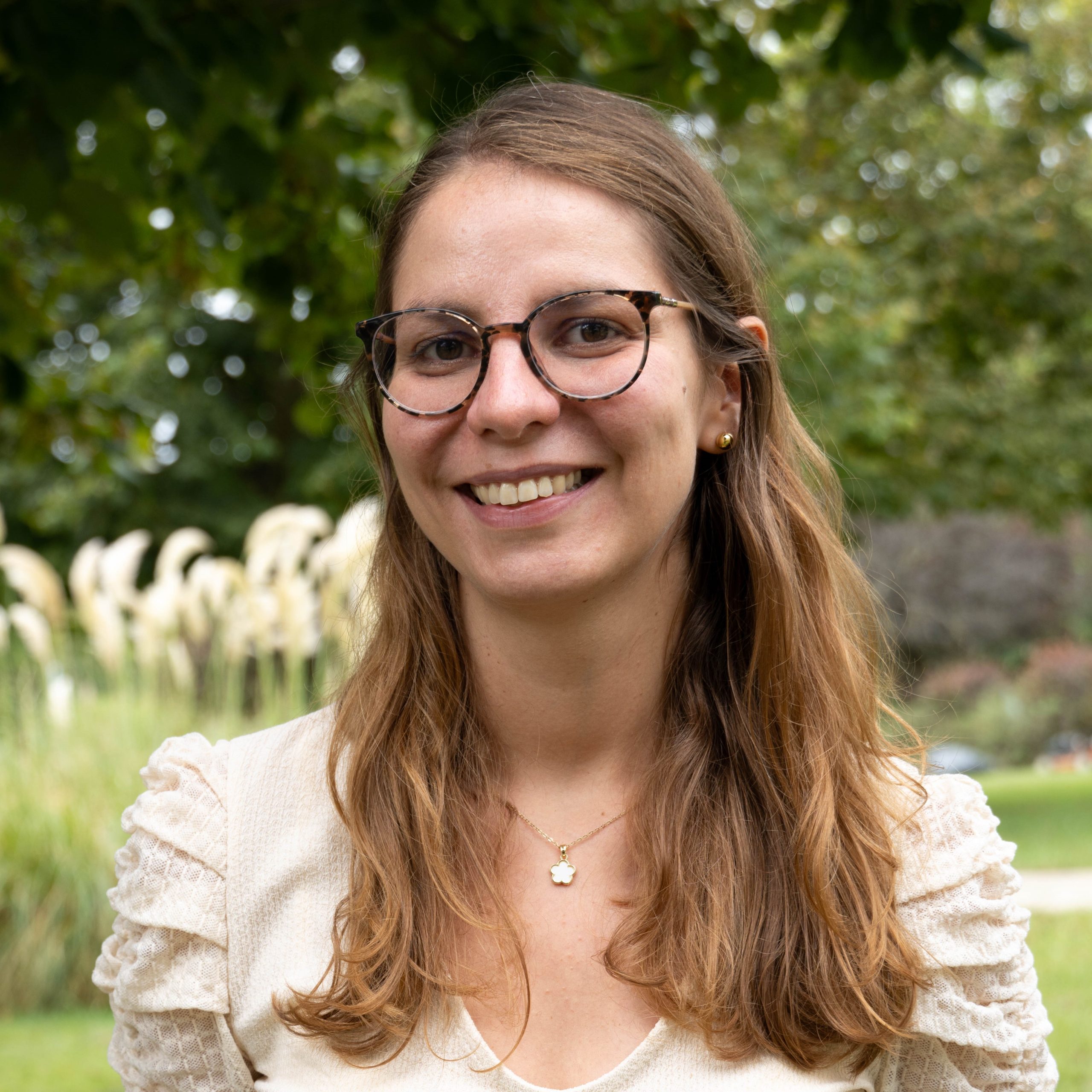
My journey at NSPH began 4 years ago when I joined the Master's programme in Public Health, and has been consolidated until I started my PhD. Along the way, I've had the opportunity to take part in national and international research projects that have made a decisive contribution to my academic and professional growth, allowing me to build a solid and diverse network. I actively participated in the school's associative life, which was an enriching experience, not only because of the teamwork and community spirit, but also because I was able to represent and contribute to the continuous improvement of the student pathway at NSPH. NSPH is not only a place for learning, but also a place for belonging, growth and transformation. And it is with great pride that I am part of this community.

The motivation to participate in the Postgraduate Course in Health Economics and Health Outcomes stemmed from the desire to gain a deeper understanding of how the Portuguese healthcare ecosystem functions, particularly in relation to the approval of medicines. The hybrid format of the classes fits well with an active professional life as a Market Access manager in a pharmaceutical company. The diverse experiences of both the instructors and participants make the sessions collaborative and dynamic.


Sónia Dias, Director of NOVA National School of Public Health (NOVA NSPH), will coordinate EuroHealthNet’s European thematic group dedicated to Social, Arts and Green Prescribing, strengthening the international recognition of the work carried out in this area.
The group brings together public health institutions from different European countries, including Austria, Italy and Catalonia, and aims to bring research, public policy and practice closer together, promoting Social Prescribing as a tool for improving health, well-being and equity. Its priorities include sharing knowledge and experiences between countries at different stages of implementation, and driving the expansion, consolidation and sustainability of Social Prescribing across Europe.
“This appointment represents important recognition of the work carried out by NOVA NSPH’s Social Prescribing Knowledge Centre and an opportunity to contribute to an increasingly relevant European agenda. We want to bring evidence, policies and implementation closer together, promoting quality models adapted to different contexts and capable of addressing inequalities and the social determinants of health, thereby contributing to better health and well-being for all,” says Sónia Dias.
NOVA NSPH has been involved in the development of Social Prescribing in Portugal since 2018, having contributed to the planning, implementation, monitoring and evaluation of the first initiatives in Primary Health Care, particularly at USF da Baixa, and supported its expansion to different territories and settings. It currently coordinates the Social Prescribing Knowledge Centre Portugal and the Social Prescribing Network Portugal, which brings together organisations from the health and social sectors, academia, local authorities and civil society, promoting the generation of evidence, professional capacity-building, and the development and evaluation of integrated, people-centred responses.
The group’s creation comes amid growing European investment in this area, particularly through the Social Prescribing-EU project, funded by Horizon Europe (2025–2029), in which EuroHealthNet and NOVA NSPH are partners. The project seeks to assess the potential of these approaches to improve access to health and care for more vulnerable populations and their adaptability to different European contexts.

Applications for the Duarte Tarré Association (ADT) Social Scholarships are open until 20 October. The scholarships are intended to support university students who achieve good academic results and are experiencing financial difficulties.
The initiative aims to help more young people continue their studies and pursue their goals, recognising the importance of creating opportunities for students who, despite their academic achievements, face financial difficulties.
In addition to providing scholarships, the Duarte Tarré Association offers students close support from mentors, providing a support network based on personal connections, the sharing of experiences, and personal and academic development. The association thus seeks to create a community that supports scholarship recipients throughout their journey, recognising each student’s potential and the importance of relationships built on trust.
The application process involves submitting a form and the required documentation, followed by a socio-economic and academic assessment of the applications. Once the candidates have been selected and the results communicated, the successful applicants join the ADT network and begin their journey as scholarship recipients.
Full information on the scholarships, application criteria and the application process is available on the Duarte Tarré Association website: https://adtarre.pt/.

Portugal has established policies and programmes in several areas of prevention, but continues to face a decisive challenge: turning strategies and knowledge into effective, equitable and measurable implementation. This is one of the main conclusions of the +Prevention project, developed by NOVA National School of Public Health (NOVA NSPH) and the NOVA Center for Global Health (NCGH) at NOVA Information Management School (NOVA IMS), whose findings were presented at the CNN Portugal Summit | + Prevention Forum, at the Rectorate of NOVA University Lisbon.
The European Health Prevention Index (EHPI), developed as part of the project, assessed the implementation of 22 priority policies across 11 European countries. Portugal scored 55.3 out of 100, very close to the average of 55.6 points for the countries analysed, ranking seventh. However, only 40.9% of the policies assessed in Portugal demonstrate high levels of implementation.
Portugal performs particularly well in the areas of Immunisation and Screening, although opportunities for improvement remain, particularly in vaccination throughout the life course, participation in screening programmes and reducing inequalities in access. By contrast, Health Education and Health Literacy, as well as the use of Data and Artificial Intelligence, are among the areas with the lowest levels of implementation.
According to Sónia Dias, Director of NOVA NSPH, the findings highlight the need for a more profound change in the way prevention is integrated into the health system.
“We cannot continue to think about the sustainability of the health system solely in terms of its ability to respond to illness. We need a strong NHS that can provide care when people are ill, but that is also capable of generating health, anticipating risks and extending the number of years people live in good health. The study shows us that the challenge is no longer simply knowing what works: it is being able to take action and implement more effectively, assess the impact we are actually achieving, and measure not only expenditure but also access, equity, outcomes and return on investment,” she states.
In one of Europe’s oldest populations, preventive care accounted for just 2.3% of current healthcare expenditure in 2023, below the European average of 3.7%. The study nevertheless warns that these figures may not reflect the full extent of investment. Among the experts consulted, 88.2% believe that the expenditure on prevention reported in Portugal is underestimated, as some preventive activities are integrated into routine care, while others take place outside the health sector.
Education, the environment, housing, employment, social protection, urban planning, local authorities and community organisations also have a direct impact on population health, reinforcing the need to approach prevention across sectors and beyond the traditional boundaries of the health system.
“In fact, prevention requires a paradigm shift: rather than focusing on illness, investing in prevention means creating the conditions for people to live longer and better, with greater autonomy, quality of life and well-being, while also helping to strengthen the sustainability of health systems. Prevention must no longer be regarded as expenditure, but recognised as a strategic investment that generates value for individuals and the health system, but above all for society and the country,” adds Sónia Dias.
The researchers therefore argue that Portugal should move away from an approach focused solely on expenditure towards one centred on investment and value, linking the resources allocated to indicators of access, coverage, equity, health outcomes and return on investment. Improving information systems and monitoring mechanisms will also be essential to establish more accurately how much is invested in prevention and what impact is achieved.
The project also reinforces a central dimension of NOVA NSPH’s mission: bringing knowledge production closer to decision-making and practice. “Academia should not limit itself to producing evidence. It also has a responsibility to translate that evidence into practical tools for decision-making, support implementation, assess what works and in which contexts, and measure its impact. We want to continue to position NOVA NSPH at the intersection of research, public policy and practice,” emphasises Sónia Dias.
About +Prevention
+Prevention is a research project developed by NOVA NSPH and the NOVA Center for Global Health at NOVA IMS, with the aim of strengthening prevention as a priority in health policy. It comprises a Public Policy Framework for Prevention, the European Health Prevention Index and an analysis of the Economic Framework of Expenditure on Prevention in Portugal, seeking to generate evidence to support priority-setting, policy implementation and better-informed investment decisions.
Access the final summary report here: https://qrco.de/bh2Vxr